
PhotosyntheSlug
Alison McNeice
Category: Shows a biological concept (e.g. an egg being laid, camouflage, metamorphosis, bioluminescence)
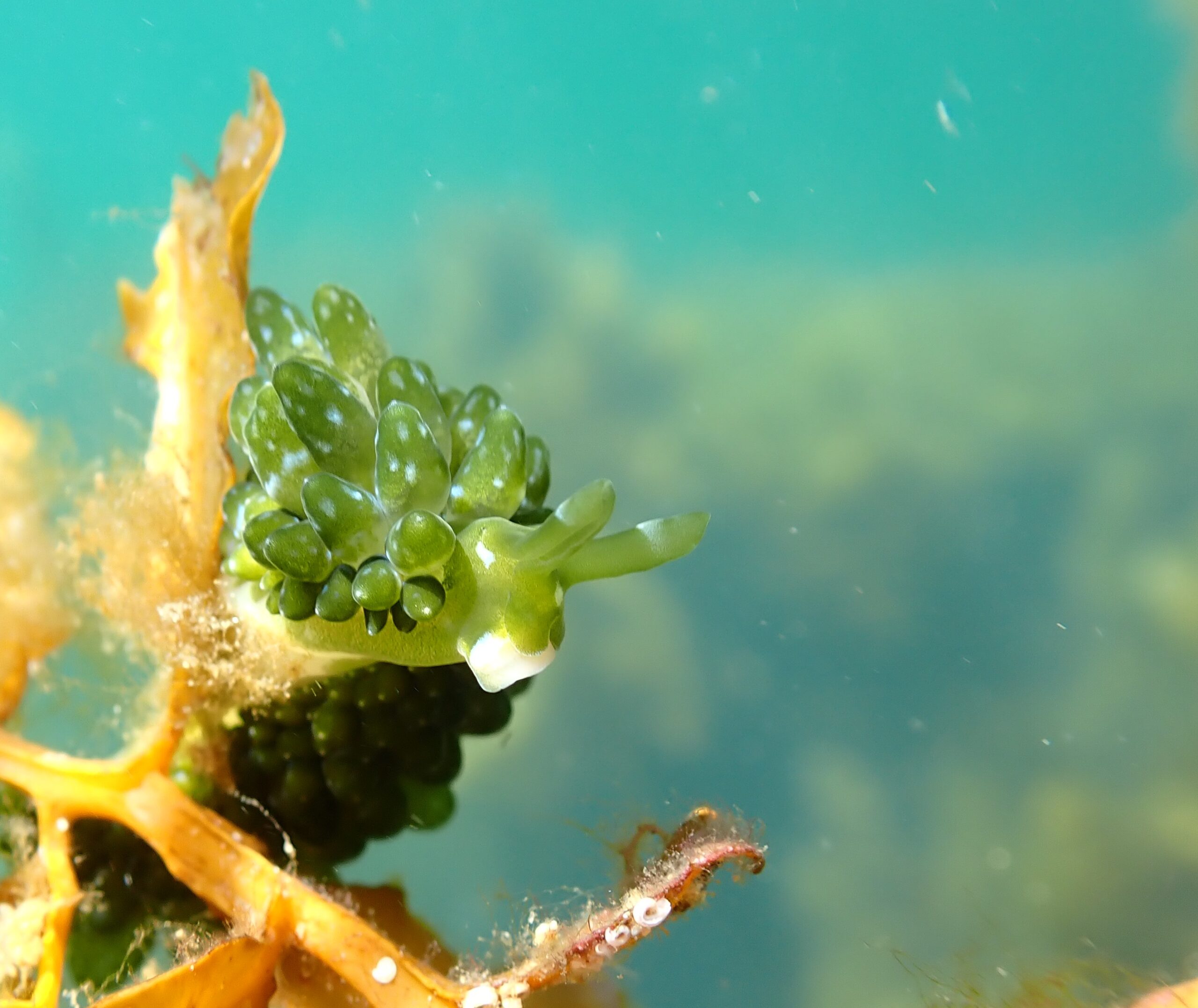
The cactus sea-slug (Sacoproteus smaragdinus) is a herbivorous sea slug measuring up to 8 cm in length. Despite its size, it is rarely seen as its appearance is almost identical to the Caulerpa cactoides alga it feeds on.
Not only do the cerata – green globules on its back – provide excellent camouflage, they also photosynthesise. The green hues are chloroplasts retained in the slug’s digestive system, a unique symbiotic relationship known as kleptoplasty. The cells continue to photosynthesise, giving its host energy. The cactus sea-slug is one of rather few multicellular animals multicellular animal to do so, giving it the nickname “”solar-powered sea slug””.
BEAKER STREET SCIENCE PHOTOGRAPHY PRIZE
This photograph was a finalist in Beaker Street’s annual Science Photography Prize. This highly-respected prize invites amateur and professional photographers to showcase the wonders of our extraordinary part of the world — which is teeming with science and scientists. Finalist images are displayed at the Tasmanian Museum and Art Gallery during Beaker Street Festival each August, with great prizes on offer for Judges’ and People’s Choice winners.
The Beaker Street Science Photography Prize is sponsored by Pennicott Foundation — thank you crew! It would not be possible without the support of Full Gamut, Tasmania’s premier fine art printers, as well as the wonderful Tasmanian businesses who donate prizes.