Jelly and the Metal Heads
Brianna Gollan, New Norfolk High School
In collaboration with Millie Goddard-Dwyer, Institute of Marine and Antarctic Studies, UTAS
Artist’s Statement
I’m working with Millie, who is a marine plankton scientist. She researches Antarctic krill, including their role in providing phytoplankton (the bottom of the food chain) with trace metals.
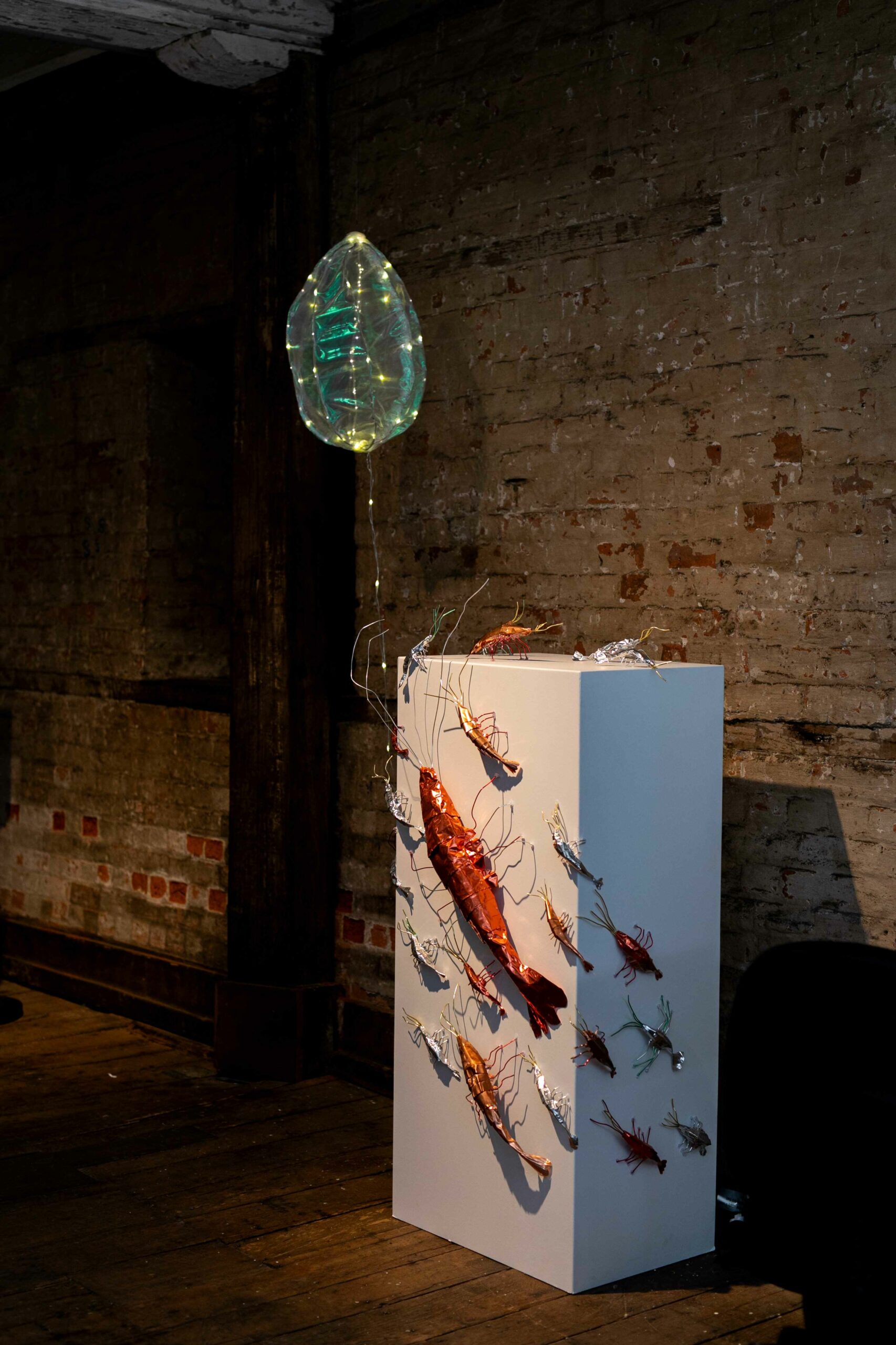
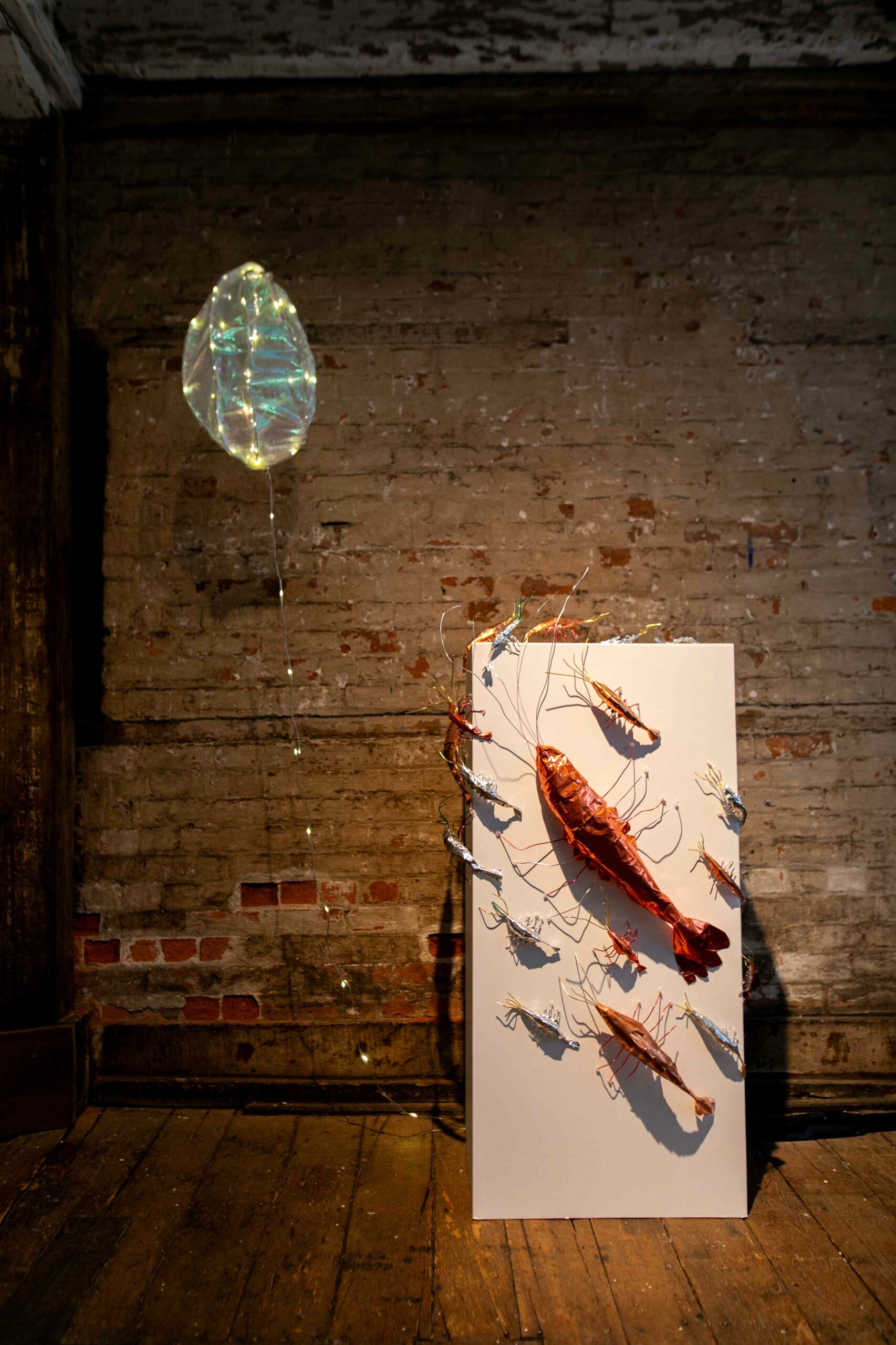
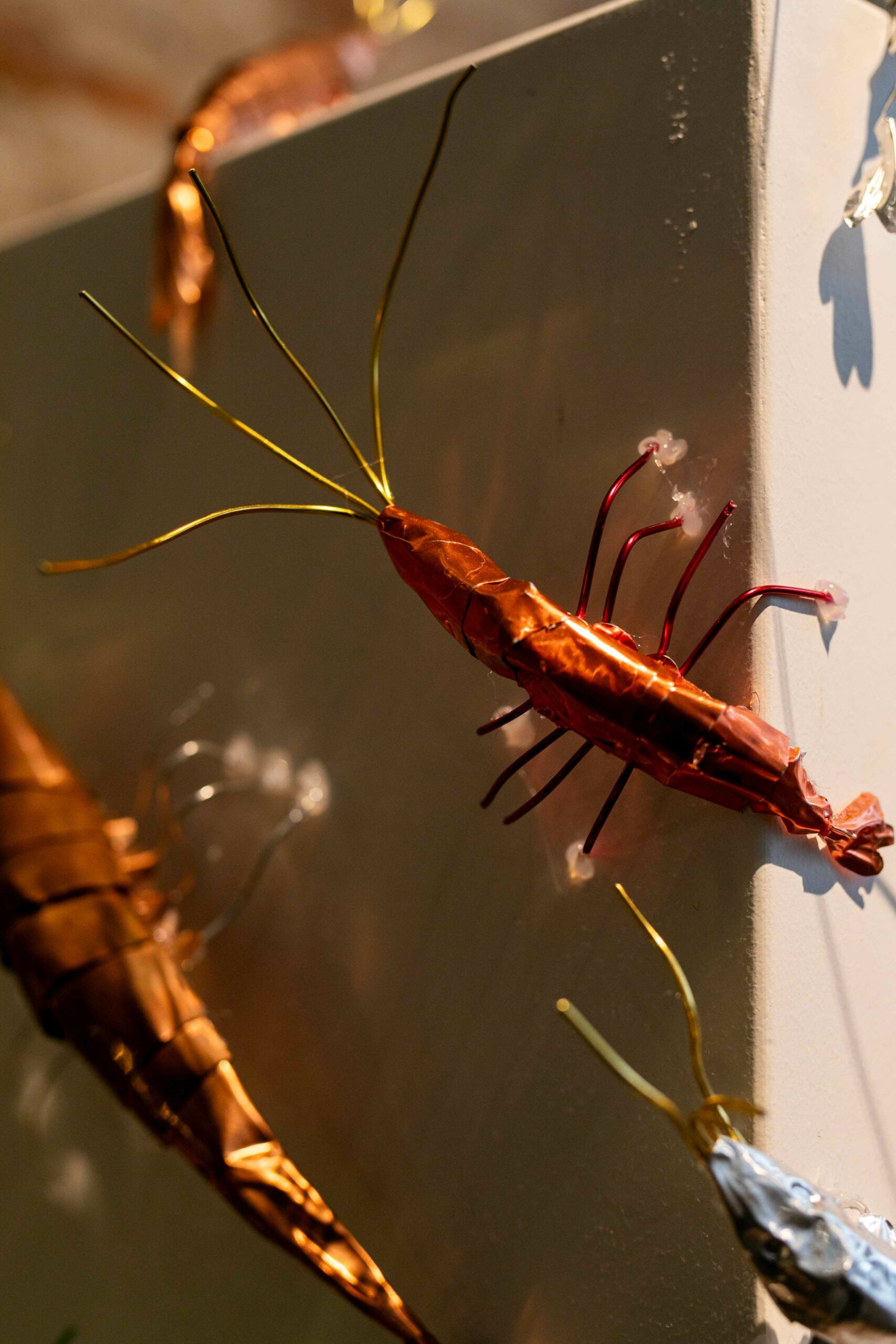
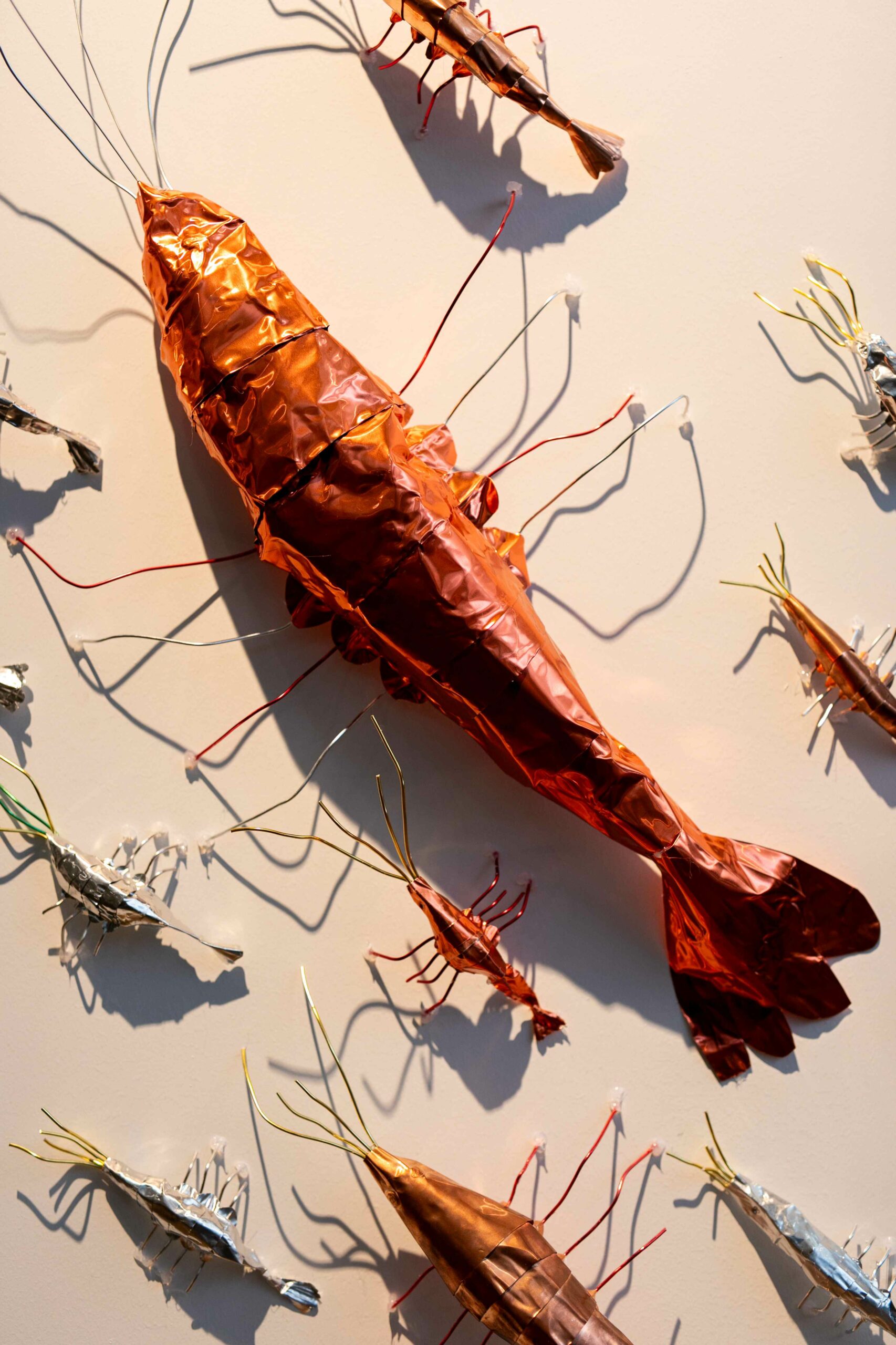
When I went to the Australian Antarctic Division I was inspired by the krill and also the iridescent jelly looking things called ctenphora (tee-noff-uh-ruh). I am trying to convey how cool Antarctic krill and the ctenphora are. With Antarctic krill I am looking specifically at the trace metals they consume and with ctenphora how interesting they look.
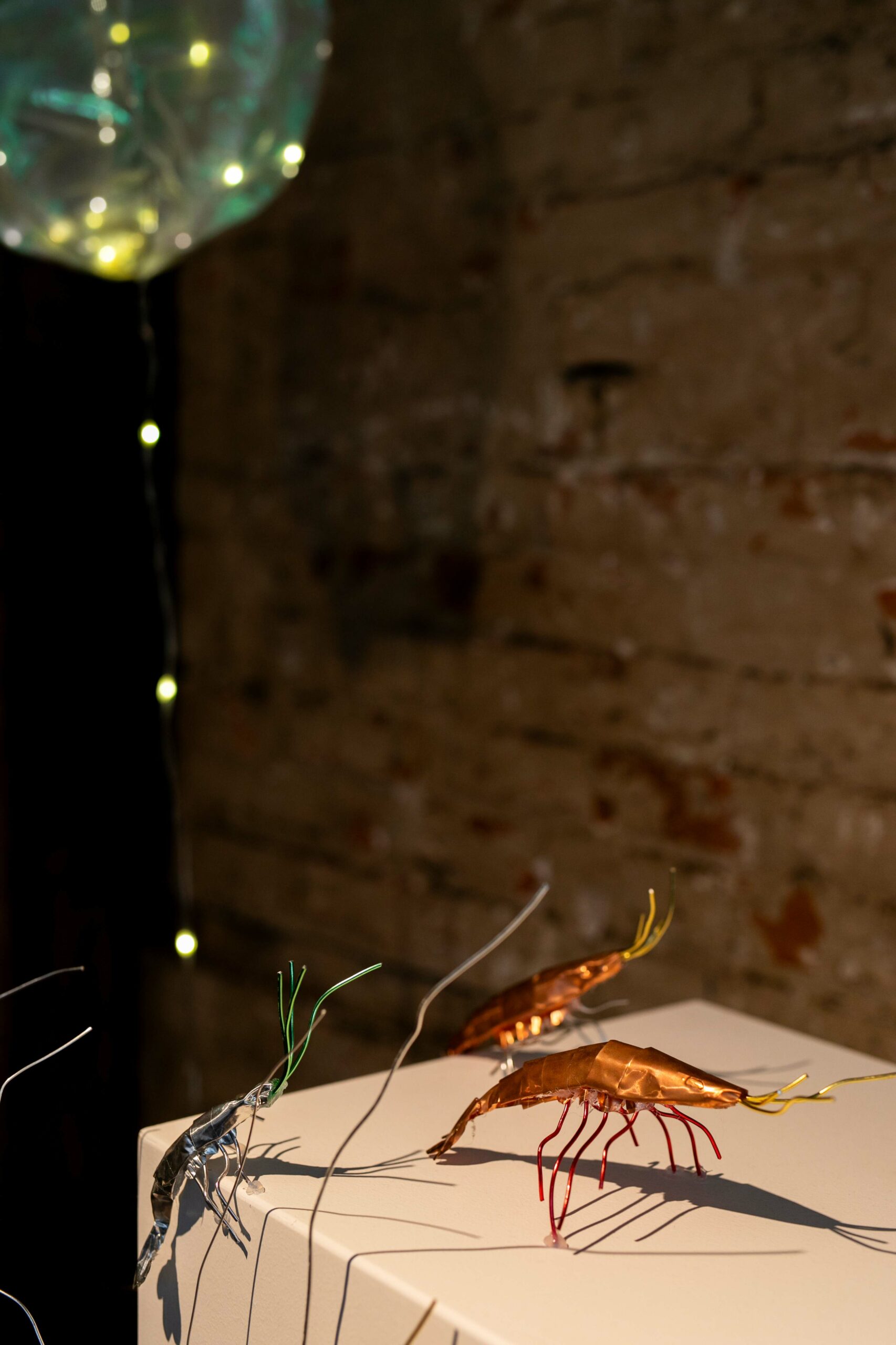
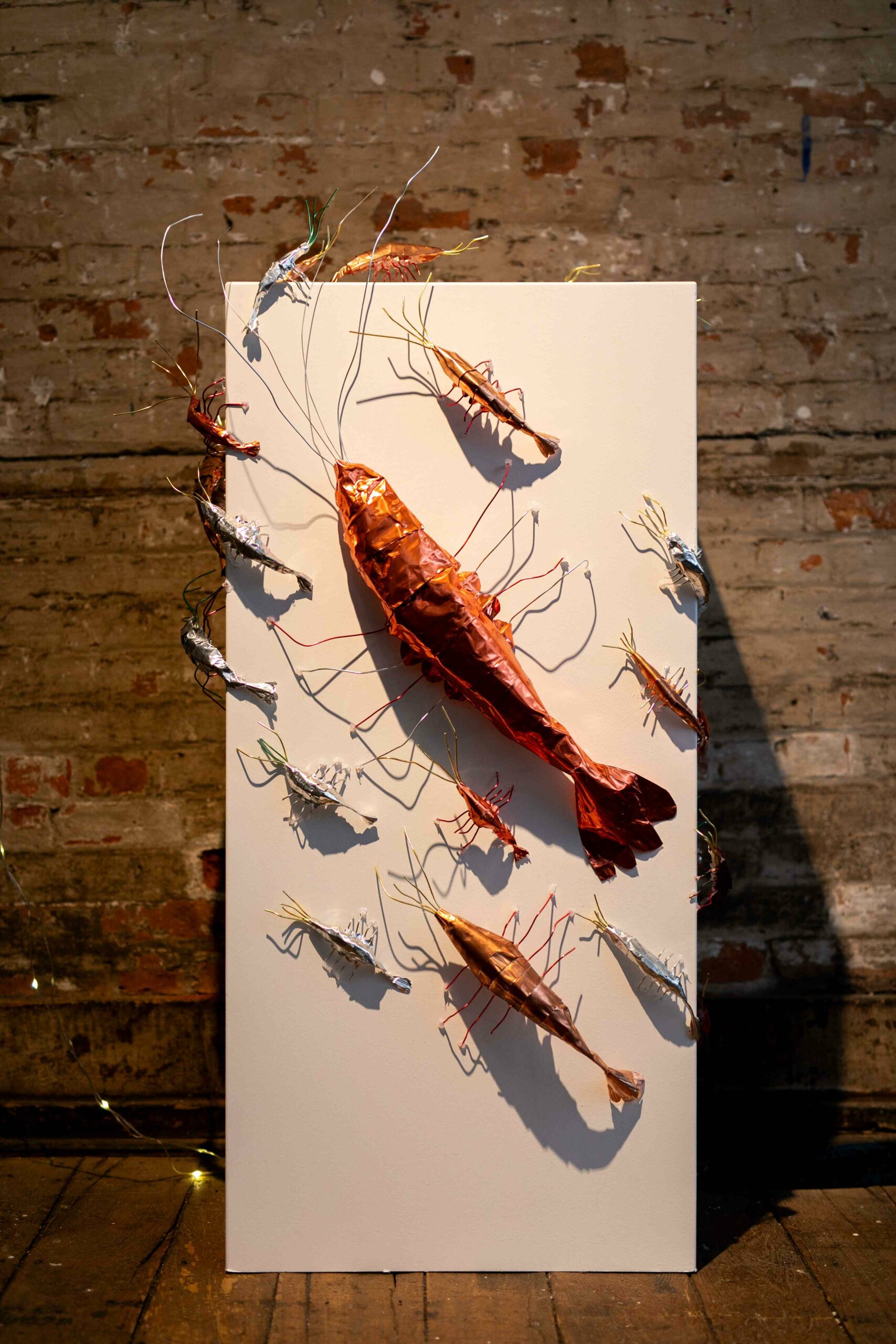
One of the trace metals that Millie measures is copper, which why my krill are made from copper sheets. The other metal she measures is iron. I used aluminium foil sheets to represent the iron and I used wire for the legs and antennas. The krill recycle these trace metals, and this gives phytoplankton the nutrients they need to support life higher up in the food chain.
For my ctenphora I used iridescent fabric, wire, and string lights. I used iridescent fabric to show off their bluey-purple colour and the string lights for the lights they have on the on their sides (where the wire is).
My method for creating these were, soda, food, thoughts and prayers, so basically just praying that it works out, and it did, I like them.
I hope when people look at my artwork, they see how cool the Antarctic krill and ctenphora are and appreciate them.
I really liked doing CoLab, I made friends, I learned new techniques, made cool stuff and learned about Antarctic krill. It taught me patience and kindness and to wear gloves when working with copper and to wait a little bit for the hot glue to dry before I burn my fingers (learned the hard way, lol).
Fun fact, Antarctic krill have up to 3000 eggs during summer. These sink 1000 meters depth to hatch when ready.
Fun fact 2, Antarctic krill are found in 300 meters depth to 3500 depth. Pretty cool right?
Project Gallery