Chickpeas for a Changing Climate
Madalyn Barratt, Big Picture, Hobart City High School
In collaboration with Esmat Sarafraz, School of Natural Sciences, UTAS
Artist’s Statement
I collaborated with Esmat who is researching how different chickpea plants are being affected by climate change. She is looking at which genes will produce the plants more likely to flower and produce seeds as the planet heats up.
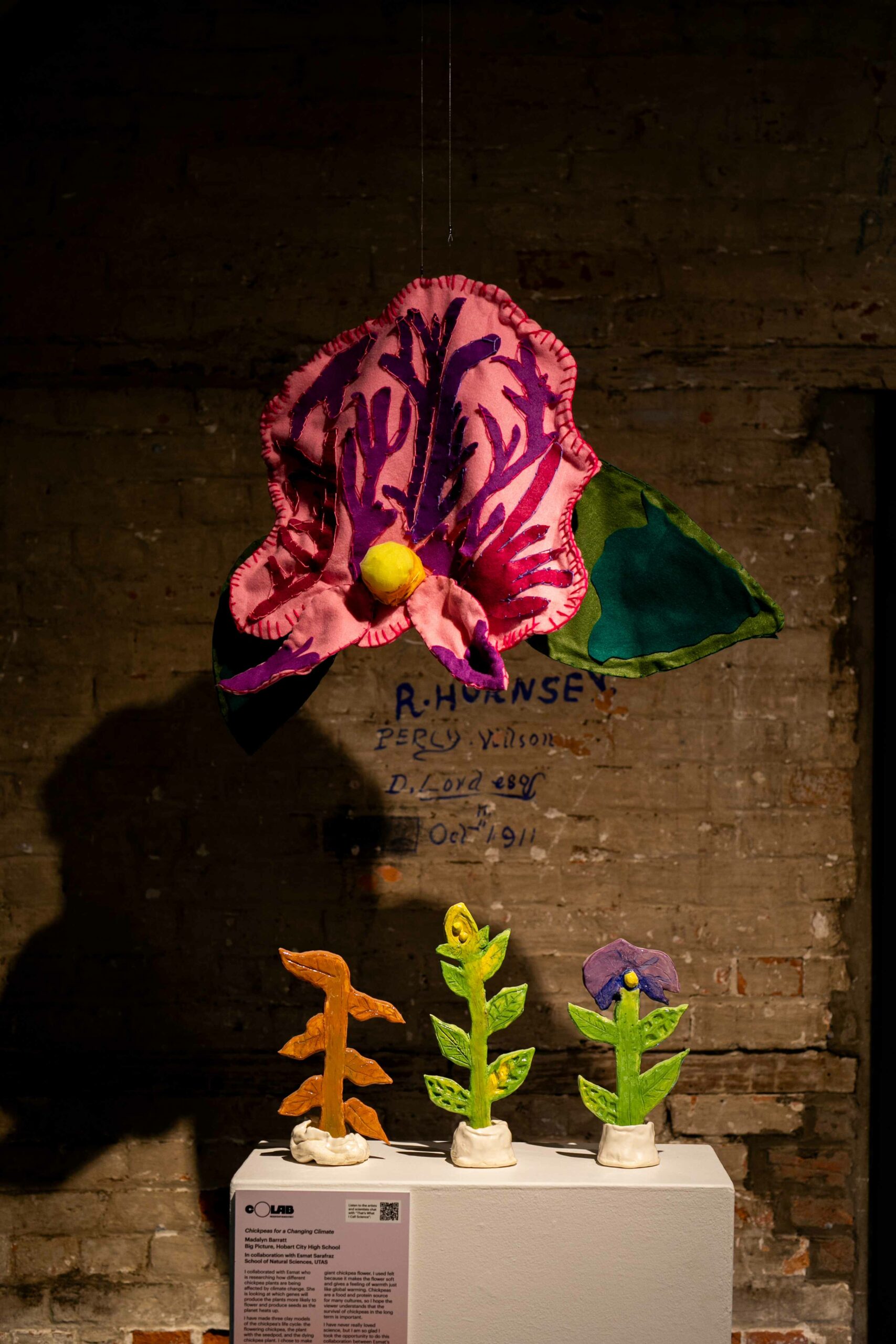
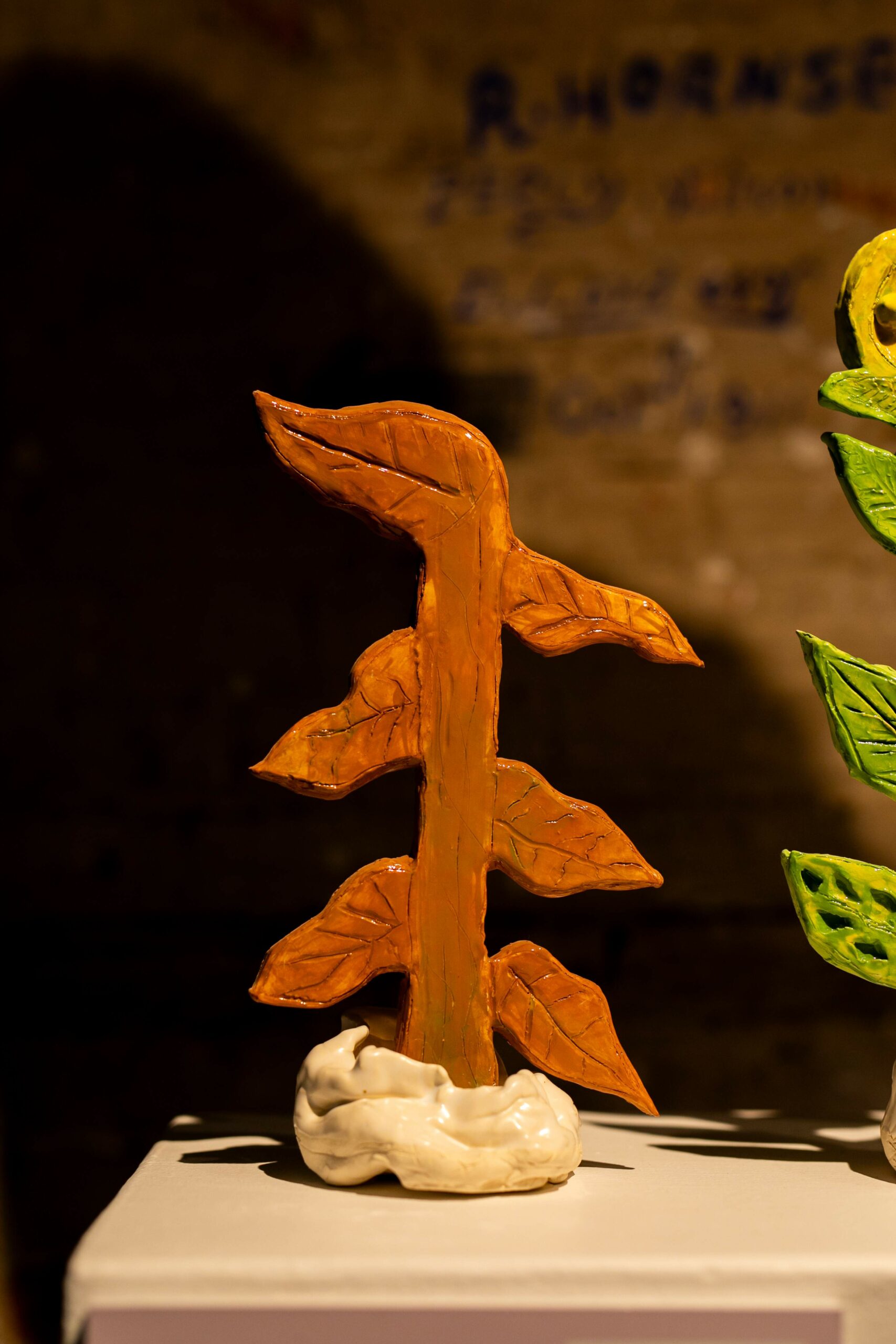
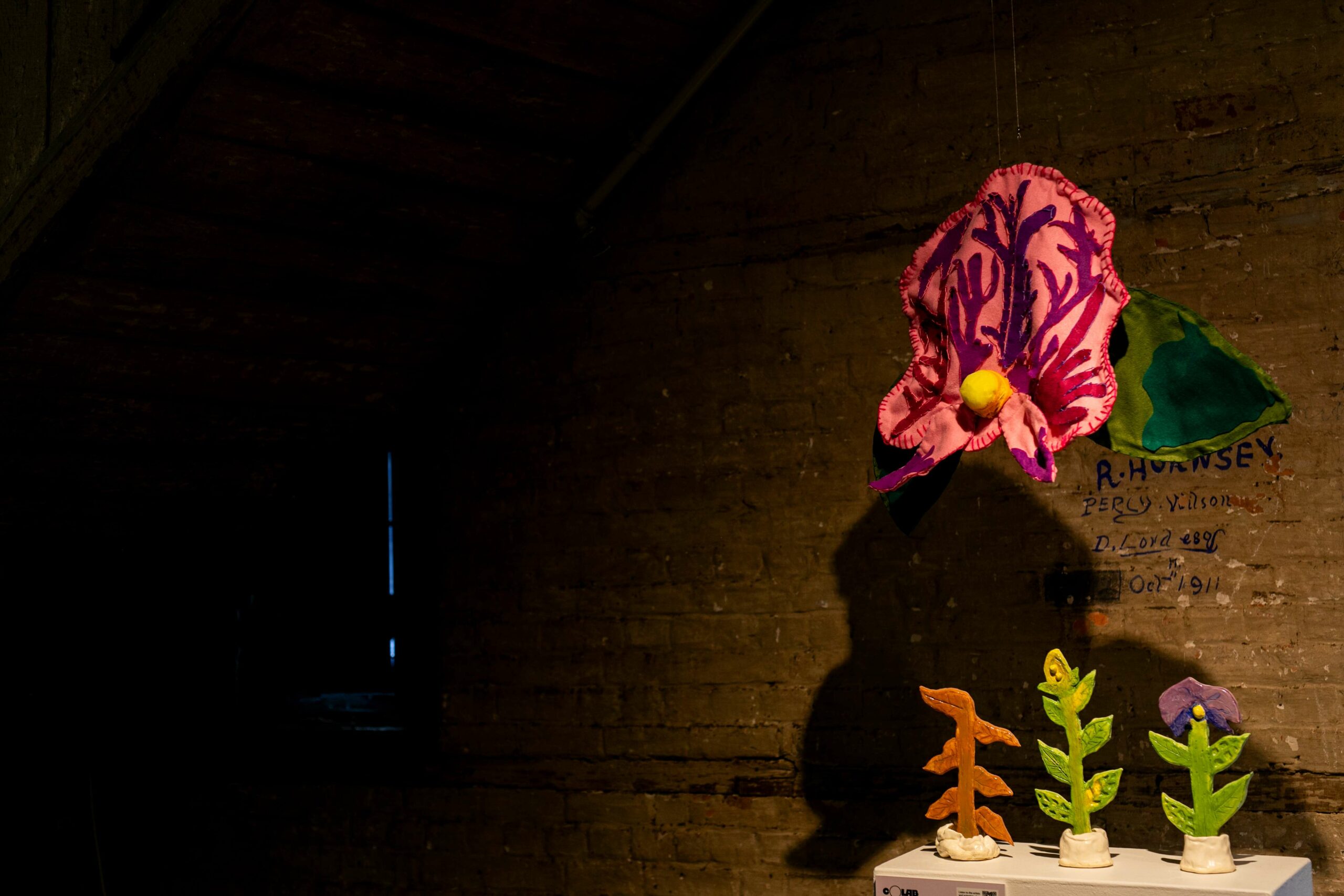
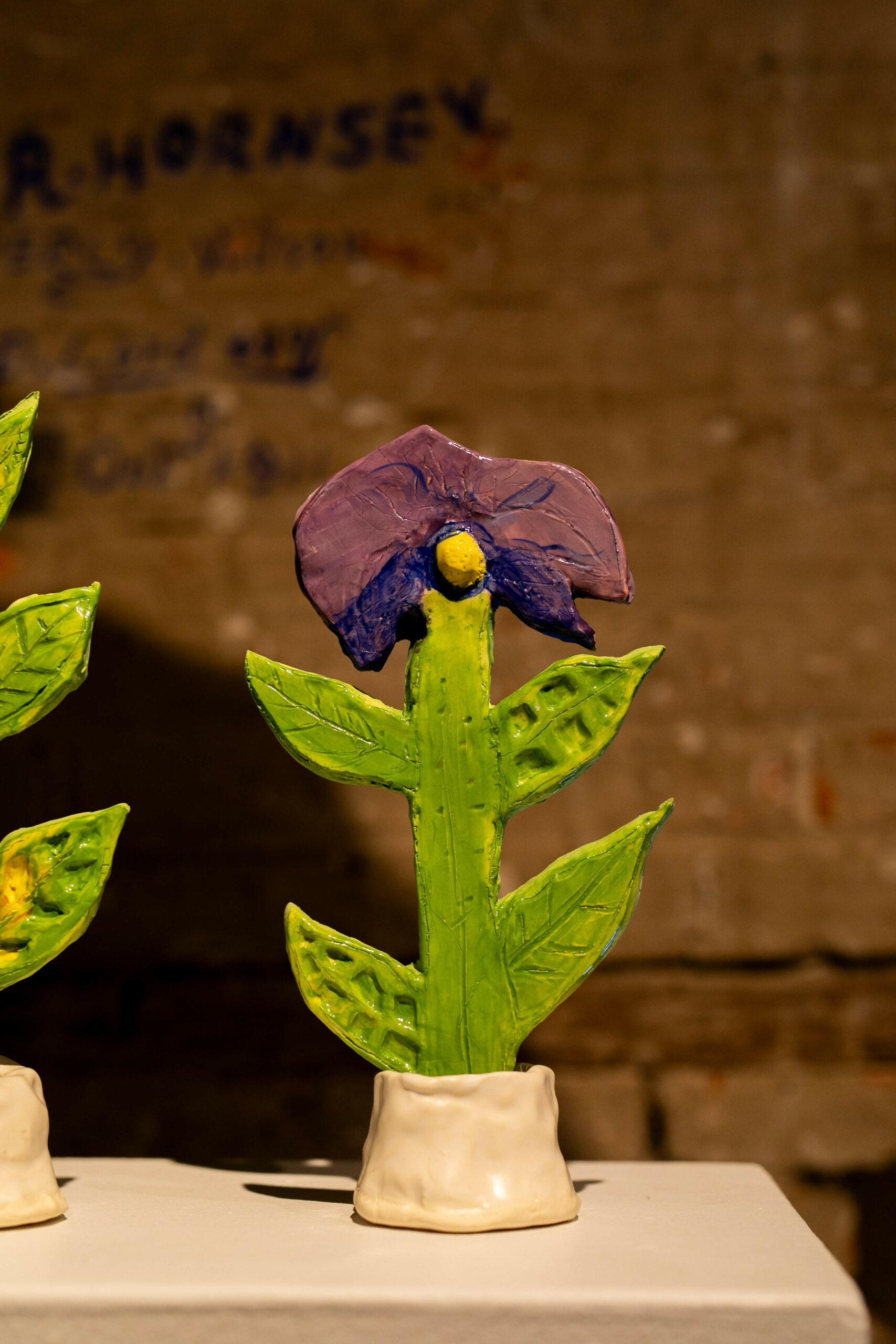
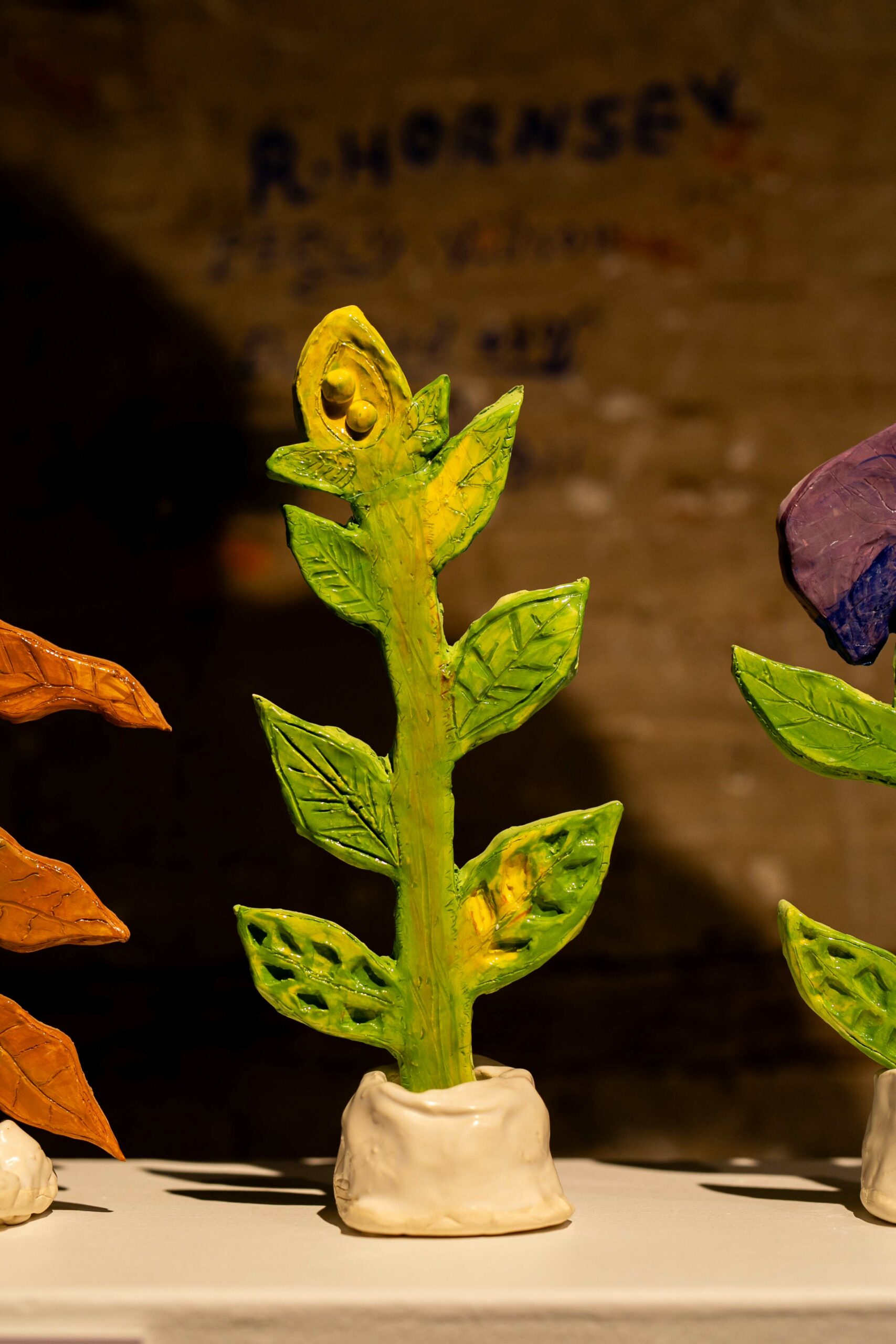
I have made three clay models 0f the chickpea’s life cycle: the flowering chickpea, the plant with the seedpod, and the dying chickpea plant. I chose to make three models as Esmat is looking at three different growth stages. The clay represents the soil that the chickpeas are growing in and how the environment is becoming too hot and dry for chickpeas in the places they used to grow.
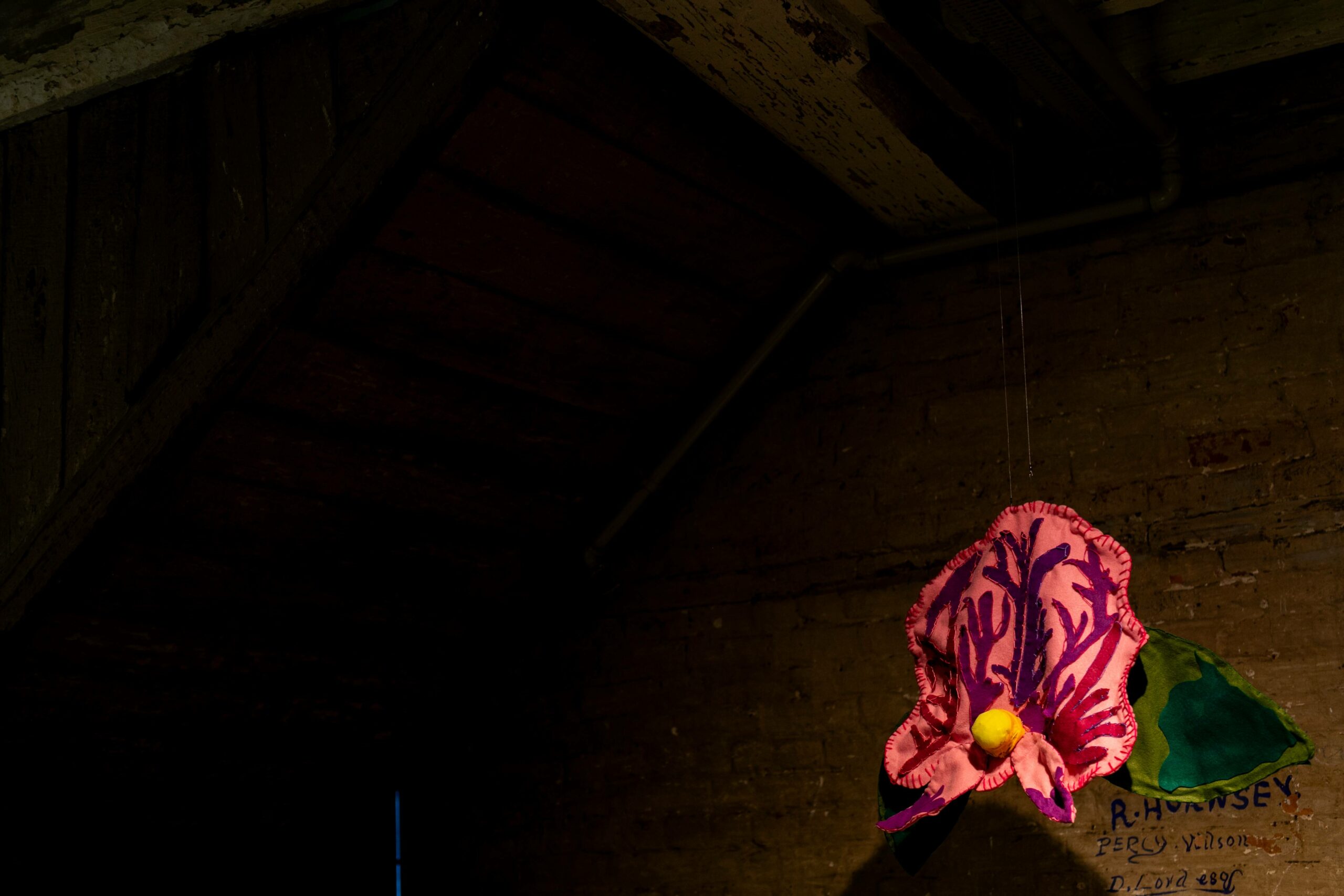
I want the viewer to see how beautiful the flowering stage of the chickpea is, so I also made a
giant chickpea flower. I used felt because it makes the flower soft and gives a feeling of warmth just like global warming. Chickpeas are a food and protein source for many cultures, so I hope the viewer understands that the survival of chickpeas in the long term is important.
I have never really loved science, but I am so glad I took the opportunity to do this collaboration between Esmat’s research and my art. It taught me how much art and science can intertwine with each other, and how art can spread awareness about what scientists are researching.
Project Gallery