Slime moulds: Overlooked and underestimated
Sarah Lloyd
Category: Utilises macrophotography
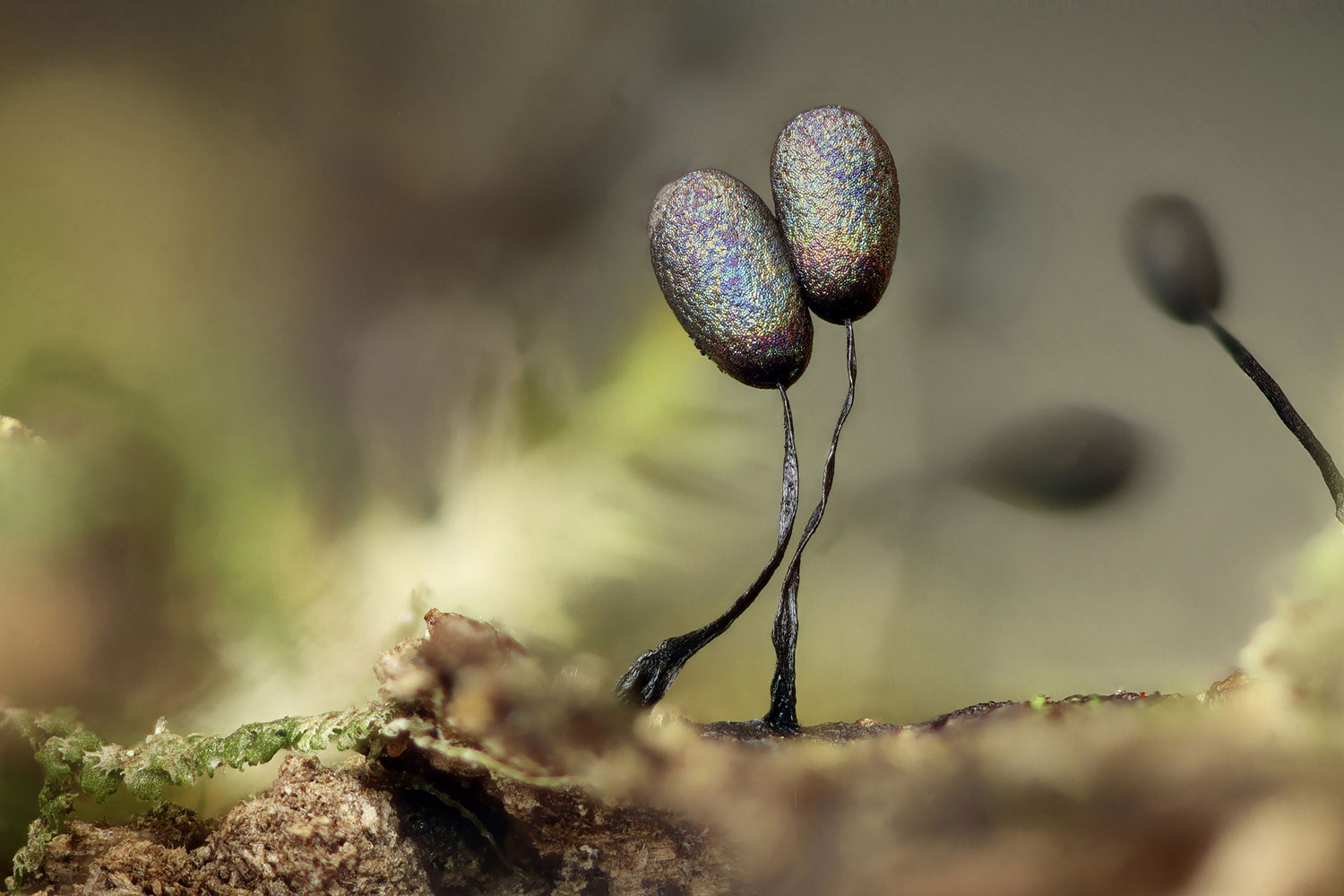
This 3 mm tall Lamproderma gracile is one of approximately 175 species of slime mould I have found along a one-kilometre forest track, which gives an inkling of just how common they are on vegetation in all terrestrial ecosystems.
Now classified as Amoebozoans, the three life stages of slime moulds – amoeba, plasmodium and spore-bearing fruiting body – perform important roles in different ecological niches.
Amoebae predate soil-dwelling bacteria and are the principal recyclers of soil micronutrients; plasmodia consume yeasts, fungal spores and hyphae, and are also important recyclers. Spores and plasmodia provide food for collembola, flies, beetles, snails and parasitic fungi.
BEAKER STREET SCIENCE PHOTOGRAPHY PRIZE
This photograph was a finalist in Beaker Street’s annual Science Photography Prize. This highly-respected prize invites amateur and professional photographers to showcase the wonders of our extraordinary part of the world — which is teeming with science and scientists. Finalist images are displayed at the Tasmanian Museum and Art Gallery during Beaker Street Festival each August, with great prizes on offer for Judges’ and People’s Choice winners.
The Beaker Street Science Photography Prize is sponsored by Pennicott Foundation — thank you crew! It would not be possible without the support of Full Gamut, Tasmania’s premier fine art printers, as well as the wonderful Tasmanian businesses who donate prizes.