
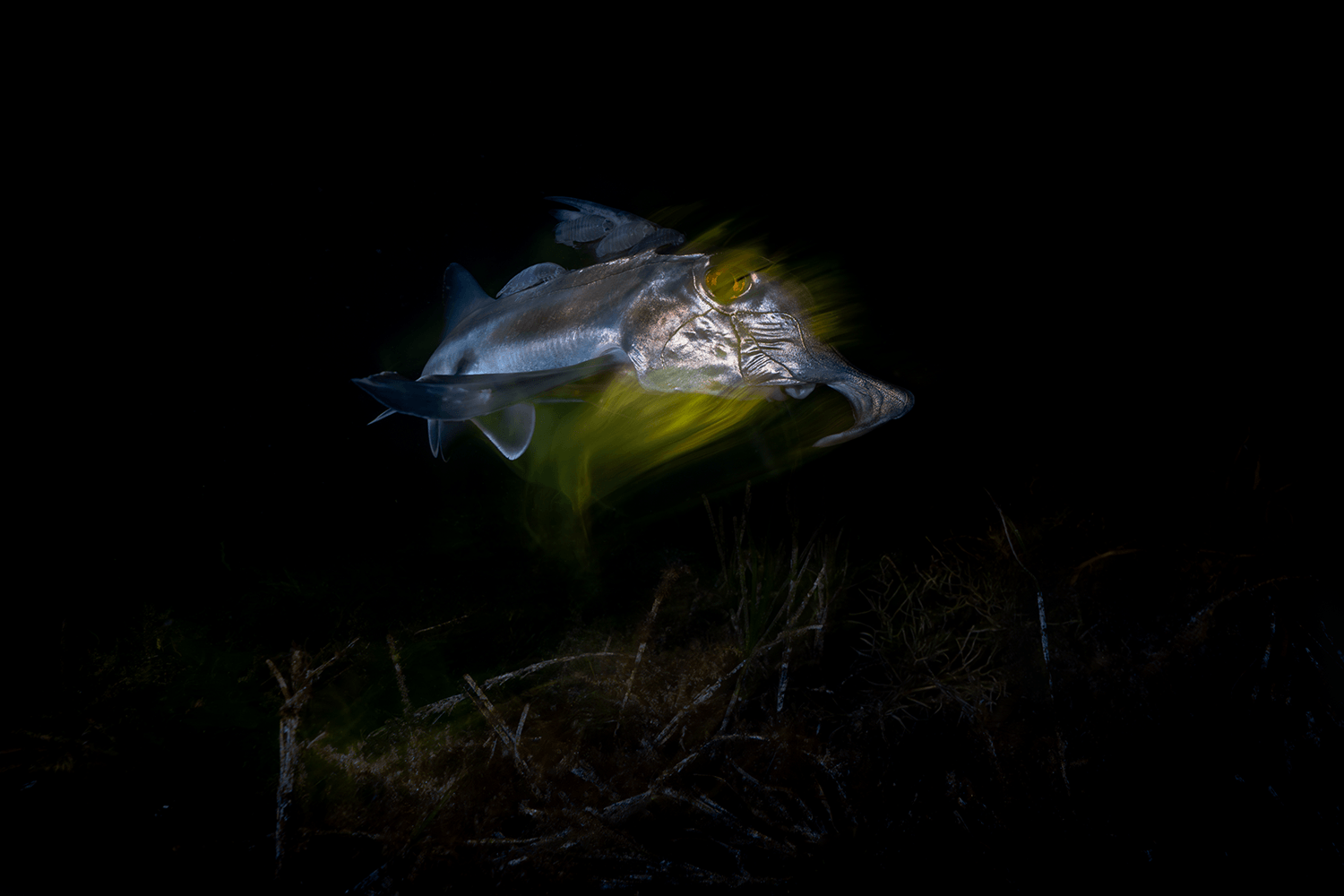
A Ghostly Chimaera
Daniel van Duinkerken | @wildpeekau
An Australian Ghostshark (Callorhinchus milii) scours the seagrass beds of the river Derwent for an easy meal. This is not actually a shark but a ‘Chimaera’. This group of cartilaginous fishes branched off from the sharks and rays nearly 400 million years ago. Members of this species use their plough-shaped snouts to detect prey hidden in the sand. Their snouts are lined with the ‘Ampullae of Lorenzini’, little pores that sense the faint electric fields of potential prey. Ghostsharks also have a large spine on their dorsal fin to fend off large predators, but as you may have noticed, it may be the smaller parasitic predators they need to watch out for. On the back of the fish in the photo you can see at least four isopods that are feeding off blood and mucus. To emphasise their ghostly appearance with light streaks, I utilised a long exposure with both a flash and dive lights.
BEAKER STREET SCIENCE PHOTOGRAPHY PRIZE
This photograph was a finalist in Beaker Street’s annual Science Photography Prize. This highly-respected prize invites amateur and professional photographers to showcase the wonders of our extraordinary part of the world — which is teeming with science and scientists. Finalist images are displayed at the Tasmanian Museum and Art Gallery during Beaker Street Festival each August, with great prizes on offer for Judges’ and People’s Choice winners.
The Beaker Street Science Photography Prize is sponsored by Pennicott Foundation — thank you crew! It would not be possible without the support of Full Gamut, Tasmania’s premier fine art printers, as well as the wonderful Tasmanian businesses who donate prizes.